
gutters and downspouts and gutter guard options.
Drainage Systems That Stop Foundation Problems
gutters and downspouts and gutter guard options. in navigation menu for properties with water pooling near walls or overflowing eaves
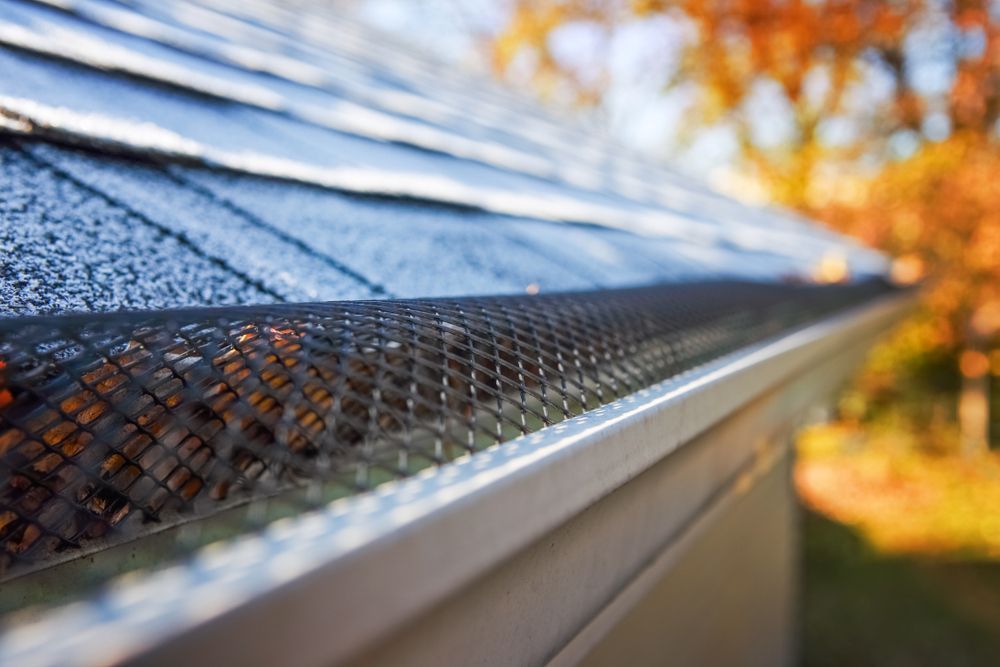
Gutters that overflow during storms or pull away from the fascia dump thousands of gallons directly against your foundation, creating hydrostatic pressure that cracks basement walls and saturates crawlspace soil. The work includes fabricating seamless gutters on-site using a gutter machine that forms continuous five-inch or six-inch channels from coiled metal, eliminating the seams where standard sectional gutters separate and leak. Downspouts connect to the gutter system and discharge at grade level, but without proper extensions, water still pools within three feet of the foundation where it seeps through backfill soil and enters the basement through cove joints or crack. Nailhead Roofing installs DrainTile Extensions at the bottom of each downspout to carry water ten to fifteen feet away from the house, and the company offers E-Z Gutter Guard brand covers that prevent leaf buildup while allowing water to enter the channel during heavy rain.
The installation process involves measuring the roofline, calculating the slope required for water to flow toward downspouts, and forming the gutter on-site to fit the exact length of each eave without joints. Gutter guards snap or slide into place over the open channel, blocking debris while maintaining flow capacity during storms.
Request a detailed estimate based on your roofline measurements and drainage requirements.
What You Notice Once Gutter Systems Are Finished
Seamless gutter fabrication means the channels have no joints along straight runs, so water flows directly to the downspouts without leaking at seams that eventually corrode and separate. E-Z Gutter Guard covers install across the top of the gutter, creating a surface that sheds leaves and shingle grit while allowing rainwater to enter through the guard's filtering mechanism. DrainTile Extensions connect to downspout outlets and run underground or across the surface to discharge points well beyond the foundation perimeter, preventing the soil saturation that causes settling, cracking, and hydrostatic pressure against basement walls.
After the system is installed, you'll see that water exits the roof edge without cascading over the gutter face during storms, downspouts remain clear without the clogging that backs water into the soffit, and the area around the foundation stays dry instead of turning into mud trenches after each rain. Basement walls no longer show moisture stains or efflorescence where water previously seeped through the foundation, and crawlspace humidity drops because water is diverted away before it saturates the soil under the house.
The choice between five-inch and six-inch gutters depends on roof pitch, square footage, and how quickly your roof sheds water during heavy rain, while the decision to add gutter guards depends on tree coverage and whether you're willing to clean gutters twice a year or prefer a system that stays clear with minimal maintenance.
Answers to Frequent Service Questions
Homeowners often ask about gutter sizing, how guards affect water flow, and what DrainTile Extensions actually accomplish for foundation protection.
- How does seamless gutter fabrication prevent the leaks that happen with sectional gutters? Seamless gutters are formed from a single piece of coiled metal cut to the exact length of the roof edge, eliminating the snap-together joints and caulked seams where sectional gutters corrode and separate after a few years of thermal expansion and contraction.
- What makes E-Z Gutter Guard different from mesh screens or foam inserts? E-Z Gutter Guard uses a solid cover with a filtering edge that allows water to enter while blocking leaves and debris, unlike mesh screens that clog with shingle grit or foam inserts that trap moisture and decompose inside the gutter channel.
- When should six-inch gutters be used instead of five-inch? Six-inch gutters handle higher water volumes on roofs with steep pitches, large square footage, or minimal overhang, where runoff concentrates quickly and overwhelms the capacity of standard five-inch channels during heavy storms.
- What do DrainTile Extensions do that regular downspouts don't? DrainTile Extensions carry water ten to fifteen feet away from the foundation before discharging it, preventing the soil saturation that occurs when downspouts dump water directly at the base of the wall where it seeps through backfill and enters the basement or crawlspace.
- How often do gutters with guards still need cleaning? Gutter guards reduce cleaning frequency from twice a year to once every two or three years, though small debris like pine needles or seed pods may still accumulate on top of the guard and require occasional removal to maintain full water flow.
Nailhead Roofing measures your roofline, calculates drainage capacity requirements, and fabricates gutters on-site to fit your exact eave dimensions. Schedule a property evaluation to review E-Z Gutter Guard options and determine where DrainTile Extensions should discharge to keep water away from your foundation.
