Siding services
Walls Built to Handle Decades of Weather
Siding services in navigation menu for properties with aging exterior walls or weather damage
Nailhead Roofing handles siding installations and repairs using vinyl, aluminum, and steel materials in both vertical and horizontal configurations. The work addresses homes where existing siding has cracked, warped, faded, or separated from the structure, leaving the underlying sheathing exposed to moisture. Steel and aluminum siding comes from a regional manufacturer that fabricates panels to match specific project dimensions, and the company uses brake equipment to bend aluminum for wrapping window frames, door frames, garage door openings, and other trim details that require waterproof transitions.
Siding replacement involves removing damaged panels, inspecting the substrate for rot or structural issues, and installing new material that locks together to shed water away from the wall assembly. Repairs focus on replacing individual sections where impact damage or fastener failure has compromised the weather barrier, which prevents further water intrusion behind the cladding.
Schedule a property evaluation to determine which siding material and orientation suit your wall conditions.
What Proper Siding Installation Requires
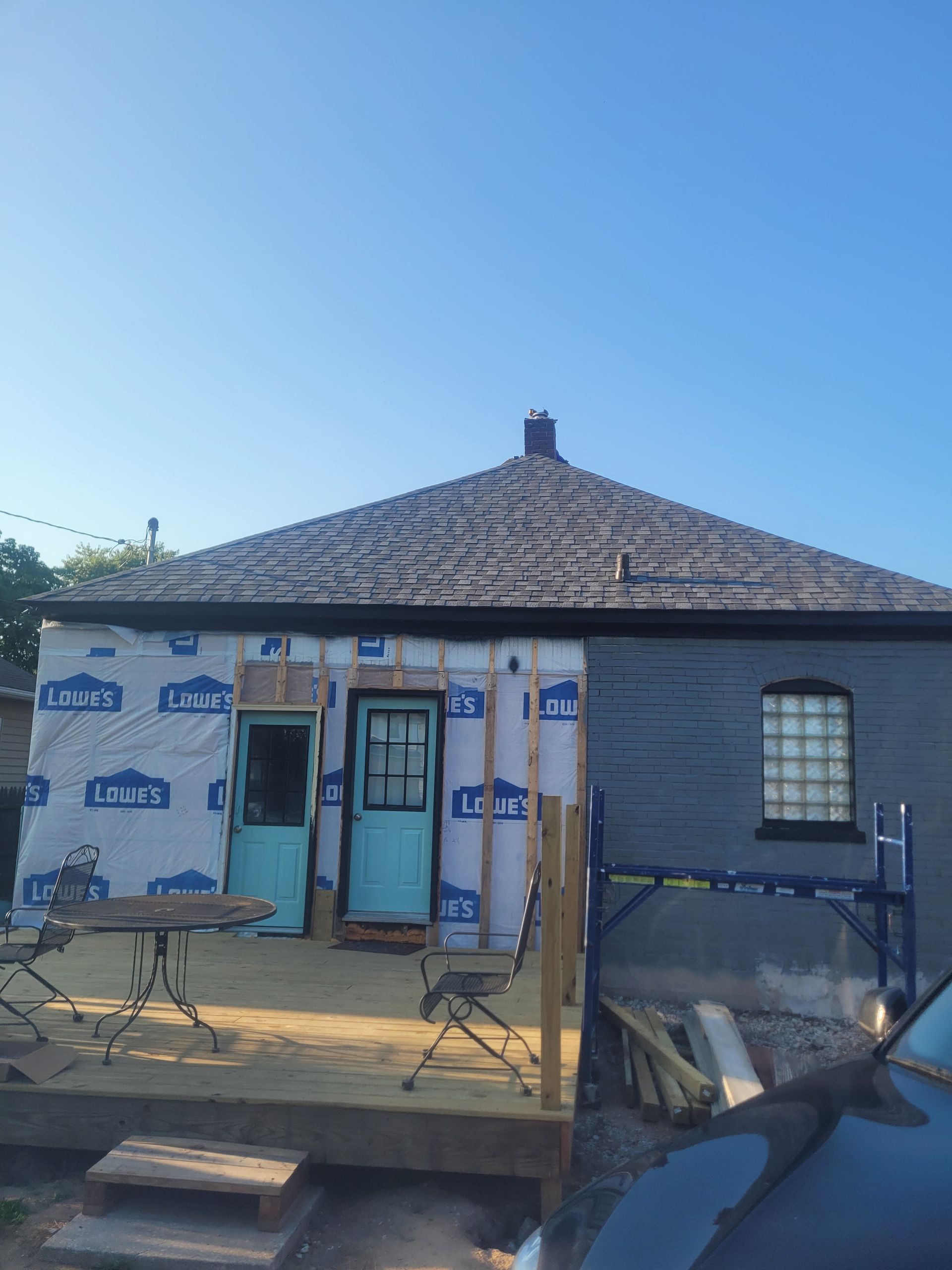
Siding work begins with removing old material and checking the wall sheathing for soft spots, moisture damage, or areas where fasteners have pulled through. Steel and aluminum panels are cut and formed to fit the exact wall dimensions, eliminating seams that can trap water or separate over time. Aluminum brake work creates custom trim pieces that wrap window and door openings, preventing gaps where wind-driven rain typically penetrates behind standard J-channel installations.
Once the new siding is installed, you'll notice that seams align tightly without gaps, panels sit flat against the wall without buckling, and water runs straight down the surface instead of seeping behind loose edges. Wrapped trim around openings eliminates the shadow lines and gaps that appear when standard trim pieces shrink or warp, and the aluminum finish resists corrosion that causes peeling paint on wood casings.
Vertical siding installations require different fastening patterns than horizontal applications because gravity pulls on the panels differently, and the choice between vinyl, aluminum, and steel depends on whether impact resistance, weight, or thermal movement matters more for your building's exposure and substrate type.
Questions Before Starting Your Siding Project
Homeowners typically ask about material differences, installation methods, and what the finished walls will look like once the work is complete.
- What is the difference between vertical and horizontal siding installations? Horizontal siding sheds water by overlapping each course downward, while vertical siding relies on interlocking seams and edge flashing to prevent water from traveling behind the panels, which makes vertical installations more sensitive to fastener placement and substrate flatness.
- How does aluminum trim wrapping prevent water damage around windows? Brake-formed aluminum wraps create a continuous metal surface over the wood frame with corners that fold and seal without joints, eliminating the gaps where caulk typically fails and allows water to rot the underlying framing.
- When should steel siding be used instead of vinyl or aluminum? Steel offers higher impact resistance in areas exposed to hail, flying debris, or mechanical damage, though it requires proper fastening to prevent oil-canning and must be finished to prevent rust at cut edges.
- What happens to existing wall sheathing during siding replacement? The sheathing is inspected once old siding is removed, and any sections with rot, delamination, or fastener damage are replaced before new siding is installed to provide a solid backing that holds fasteners and supports the new cladding.
- How does seamless fabrication affect long-term siding performance? Custom-cut panels from the regional manufacturer eliminate horizontal seams that trap water and separate over time, reducing the number of joints where wind can lift edges or moisture can penetrate behind the cladding.
Nailhead Roofing provides detailed assessments of your current wall condition and recommends siding materials based on the specific exposure, substrate, and performance requirements your building faces. Request an on-site consultation to review material options and see samples of brake-formed trim work.
